
Understanding Accidents Caused By Vehicles On Sidewalks In New York
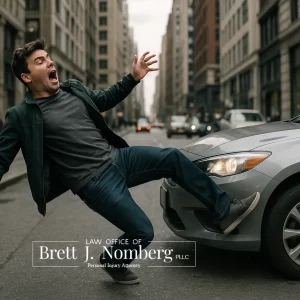
Accidents caused by vehicles on sidewalks are among the most traumatic and legally complex incidents that occur on New York City streets. When a car, truck, or commercial vehicle leaves the roadway and strikes people on what should be the safest part of the street, the physical and emotional consequences can be life-altering. Attorney Brett J. Nomberg has represented pedestrians injured in sidewalk vehicle incidents across all five boroughs for more than 30 years. If you or someone you love was struck, understanding your rights under New York law is the first step toward full recovery.
Vehicles on sidewalks cause hundreds of serious injuries in New York City each year. According to NYC Vision Zero data, pedestrian fatalities and serious injuries from vehicles leaving the roadway remain a persistent public safety crisis. Unlike crashes that occur in the street, incidents with vehicles on sidewalks give victims almost no warning and no opportunity to move to safety — the sidewalk is supposed to be a protected zone. When a driver’s negligence, distraction, impairment, or mechanical failure sends their vehicle onto the sidewalk, New York law allows injured victims to pursue full compensation, including medical bills, lost wages, pain and suffering, and long-term disability. Brett Nomberg fights to secure that compensation for every client he represents. Visit his verdicts and settlements page to see his record.
New York’s no-fault insurance system under Insurance Law §5103 provides up to $50,000 in Personal Injury Protection (PIP) benefits to cover medical expenses and lost wages for pedestrians struck by a motor vehicle — including those struck by vehicles on sidewalks — through the vehicle’s own insurance carrier. To pursue a personal injury lawsuit against the at-fault driver beyond no-fault benefits, your injuries must meet the serious injury threshold under Insurance Law §5102(d), which includes fractures, permanent limitation, significant disfigurement, or a 90/180-day disability. If a government vehicle, municipal bus, or publicly maintained road defect contributed to the incident, a Notice of Claim must be filed within 90 days under General Municipal Law §50-e. The standard statute of limitations for private injury claims is three years under CPLR §214.
Common Causes of Accidents Caused By Vehicles On Sidewalks In New York
Vehicles on sidewalks in New York City result from a range of driver failures, vehicle defects, and road conditions. Identifying the exact cause is critical to establishing liability against the right parties — and Brett Nomberg investigates all of them:
- Driver distraction: Texting, phone use, in-car entertainment systems, and GPS interaction are among the most common causes of accidents with vehicles on sidewalks. Distracted driving is the leading contributing factor in all NYC crashes, cited in over 12,000 incidents per year per NYPD data. Cell phone records can be subpoenaed to prove a driver was on their device at the time of impact.
- Intoxication: Alcohol- and drug-impaired drivers cause a disproportionate share of vehicles on sidewalk incidents, particularly late at night and on weekends. A DWI conviction in a related criminal case can significantly strengthen the civil injury claim.
- Speeding and reckless driving: Excessive speed reduces a driver’s ability to respond to pedestrians and street conditions. When a vehicle is traveling too fast on a NYC street and loses control, a vehicle on sidewalk incident frequently results.
- Mechanical failures: Brake failures, steering defects, and tire blowouts can send vehicles onto the sidewalks without any driver negligence — creating potential product liability claims against the vehicle manufacturer or maintenance company.
- Medical emergencies: Sudden incapacitation from heart attacks, strokes, seizures, or diabetic episodes can cause drivers to lose control and mount the sidewalks. These cases may involve the driver’s medical providers if a known condition was improperly managed.
- Parking and low-speed maneuver errors: Many vehicles on sidewalk injuries in NYC occur during parking attempts, reverse maneuvers, or failed turns at intersections — particularly involving delivery trucks, commercial vehicles, and SUVs with limited driver visibility.
- Road defects and infrastructure failures: Potholes, missing barriers, failed guardrails, and poorly designed curbs can contribute to incidents with vehicles on sidewalks. When a public road condition caused or contributed to the crash, a municipal liability claim against the City of New York may apply.
New York Laws Governing Vehicles on Sidewalks
New York State Vehicle and Traffic Law provides a comprehensive legal framework that governs driver responsibilities and the rights of pedestrians injured by vehicles on sidewalks. Under New York Vehicle and Traffic Law §1225-d, handheld mobile device use while driving is prohibited. VTL §1180 prohibits driving at speeds unreasonable for existing conditions. VTL §1146 requires drivers to exercise due care to avoid colliding with pedestrians — and the failure to do so in a vehicle on sidewalk crash creates direct civil liability. New York operates under a comparative negligence standard under CPLR §1411, meaning a pedestrian’s recovery is reduced by any percentage of fault attributed to them — but is not eliminated unless they are found 100% at fault. In vehicles on sidewalk cases, pedestrian fault is almost never applicable, since sidewalks are legally designated pedestrian spaces.
When the incident involves a commercial vehicle — a delivery truck, city bus, contractor vehicle, or taxi — additional liability may flow to the vehicle’s employer under respondeat superior, making the company responsible for the driver’s negligence during the course of employment. Vehicles on sidewalk incidents involving MTA buses or NYC Department of Sanitation trucks require a Notice of Claim within 90 days, making immediate legal consultation essential. See Brett Nomberg’s full practice on personal injury litigation in New York for more on how these claims are built.
Injuries Commonly Caused by Vehicles on Sidewalks
The injuries sustained when vehicles strike pedestrians on sidewalks are among the most severe seen in personal injury law. Because pedestrians have no vehicle structure to absorb impact, even a low-speed vehicle on sidewalk collision can cause catastrophic harm:
- Traumatic brain injury (TBI) — impact with the vehicle or the ground; see brain injury practice page
- Spinal cord injury and paralysis — disc herniation, nerve damage, or permanent loss of function; see spinal cord injury page
- Bone fractures — legs, hips, pelvis, ribs, arms, and facial bones
- Internal injuries — organ damage and internal bleeding often missed in initial evaluation
- Burn injuries — from fuel ignition or vehicle contact; see burn injury page
- Crush injuries and amputations — from being pinned beneath or against a vehicle
- Psychological trauma — PTSD, anxiety, and depression following vehicle on sidewalk attacks or accidents
- Wrongful death — when a vehicle on sidewalk incident claims a life; see wrongful death page
Steps to Take Following a Vehicle on Sidewalk Accident
The actions you take in the hours immediately after being struck by a vehicle on the sidewalk directly affect your ability to recover full compensation. Follow these steps:
- Call 911 immediately. Report the vehicle on sidewalk incident to police and request emergency medical help. A police report documenting the driver, vehicle, location, and circumstances is critical evidence in every type of pedestrian injury claim.
- Seek emergency medical care the same day. TBI, internal bleeding, and spinal damage may not produce symptoms immediately. A same-day ER visit creates medical records that tie your injuries directly to the vehicle on sidewalk crash. Delayed treatment gives insurers grounds to argue your injuries came from another cause.
- Photograph and document everything at the scene. Take photos of: the vehicle, its position on the sidewalk, the driver and license plate, skid marks or tire tracks, property damage, nearby surveillance cameras, and your visible injuries. Vehicles on sidewalk incidents generate physical evidence that disappears quickly when the street is cleared.
- Identify witnesses. People who saw the vehicle come onto the sidewalk are among the most powerful witnesses in these cases. Get names and phone numbers before they leave the scene.
- Request nearby surveillance footage immediately. Businesses, ATMs, residences, and NYC DOT cameras frequently capture vehicle on sidewalk crashes. Footage is overwritten within 24–72 hours — Brett Nomberg sends legal hold letters the same day to preserve it.
- Do not give a recorded statement to the driver’s insurance company. You are not required to speak with the at-fault driver’s insurer. Any statement you give can be used to minimize your vehicle on sidewalk injury claim. Speak to Brett Nomberg first.
- Contact Brett Nomberg immediately. Call (212) 808-8092 — available 24/7 — to begin protecting your rights after a vehicle on sidewalk accident in New York.
FAQs About Vehicle on Sidewalk Accidents in New York
| Question | Answer |
|---|---|
| What should I do if I am struck by a vehicle on the sidewalk? | Call 911 immediately. If you are physically able, photograph the driver, vehicle, license plate, and the location where the vehicle mounted the sidewalk. Tell your full account to the responding officer. Seek emergency medical care the same day — even if you feel no immediate pain. Then contact Brett Nomberg before speaking to any insurance company. |
| Who pays my medical bills after a vehicle on sidewalk accident? | New York’s no-fault system generally requires the auto insurance carrier for the vehicle that struck you on the sidewalk to pay your medical bills up to $50,000 in PIP benefits, regardless of fault. If your injuries exceed no-fault limits or meet the serious injury threshold, a personal injury lawsuit can recover additional damages. Brett Nomberg evaluates all available insurance coverage, including uninsured and underinsured motorist coverage, for every vehicle on sidewalk victim. |
| What if the drivers who caused the accidents with vehicles on sidewalks are uninsured? | You may pursue a claim through your own uninsured motorist (UM) coverage or through MVAIC — New York’s fund for victims of uninsured and hit-and-run drivers. Vehicles on sidewalk incidents involving uninsured drivers are not hopeless; multiple recovery sources may be available. |
| Can I recover if I was also walking near the curb when a vehicle mounted the sidewalk? | Yes. Pedestrians in vehicles on sidewalk cases bear essentially no comparative fault — the sidewalk is a designated pedestrian zone, and drivers have a legal duty to keep their vehicles on the roadway. Your proximity to the curb does not reduce your right to recover. |
| What if a city bus or government vehicle came onto the sidewalk? | You must file a Notice of Claim within 90 days under General Municipal Law §50-e before filing a lawsuit. This deadline is strict — missing it permanently bars your claim against the public entity. Contact Brett Nomberg immediately if a government vehicle was involved in the sidewalk accident. |
| How long do I have to sue for a vehicle on sidewalk injury in New York? | Three years from the accident date for private parties under CPLR §214. If a public entity (MTA, NYC, NYPD, etc.) was involved, the 90-day Notice of Claim deadline under GML §50-e controls. Do not wait — evidence from vehicle on sidewalk crashes degrades rapidly. |
Local Resources and Contacts for Assistance Accidents On Sidewalks
Residents and visitors in New York City can access the following resources following vehicle on sidewalk accidents:
| Resource | Contact Information |
|---|---|
| New York Department of Motor Vehicles | dmv.ny.gov |
| New York Police Department | nypd.nyc.gov |
| NYC Vision Zero — Pedestrian Safety Initiative | nyc.gov/visionzero |
| NY State Vehicle and Traffic Law | nysenate.gov — VTL |
| Brett Nomberg: Trusted NY Pedestrian Injury Attorney | brettnomberglaw.com | (212) 808-8092 |
Legal Assistance for Victims of Vehicles on Sidewalks in New York
Incidents involving vehicles on sidewalks are traumatic, sudden, and often life-changing — but victims do not have to navigate the legal aftermath alone. Brett Nomberg is located at 600 Third Avenue, New York, NY and has spent more than 30 years representing pedestrians injured in vehicle on sidewalk crashes across all five boroughs. He personally manages every case, answers every client call directly, and is available 24 hours a day, 7 days a week — including weekends and holidays. All cases are handled on a contingency fee basis: you pay nothing unless Brett wins your case. His results include a $4.5 million verdict for a brain injury, $3.9 million in a case where evidence was concealed, and $1.7 million in a case involving a hidden surveillance tape. Call (212) 808-8092 to discuss your rights after a vehicle on sidewalk injury in New York.
About Brett Nomberg
Brett Nomberg is a highly respected personal injury attorney based in New York City with more than 30 years of experience representing victims of vehicle on sidewalk accidents, pedestrian knockdowns, and catastrophic injuries. Known for his dedication and client-focused approach, Brett personally manages every case — clients always speak directly with him, not a paralegal or junior associate. He has successfully handled numerous complex accident cases, including incidents with vehicles on sidewalks involving commercial trucks, rideshare vehicles, city buses, and private cars, helping injured individuals and their families secure fair compensation for their losses. Brett combines deep knowledge of New York’s Vehicle and Traffic Law, no-fault insurance system, and pedestrian injury statutes with genuine compassion for the challenges faced by vehicle on sidewalk accident victims. He is committed to protecting the rights of every New Yorker who walks the city’s streets and sidewalks. Visit brettnomberglaw.com or call (212) 808-8092 any time — 24/7 — for a free consultation. You pay nothing unless Brett wins.